
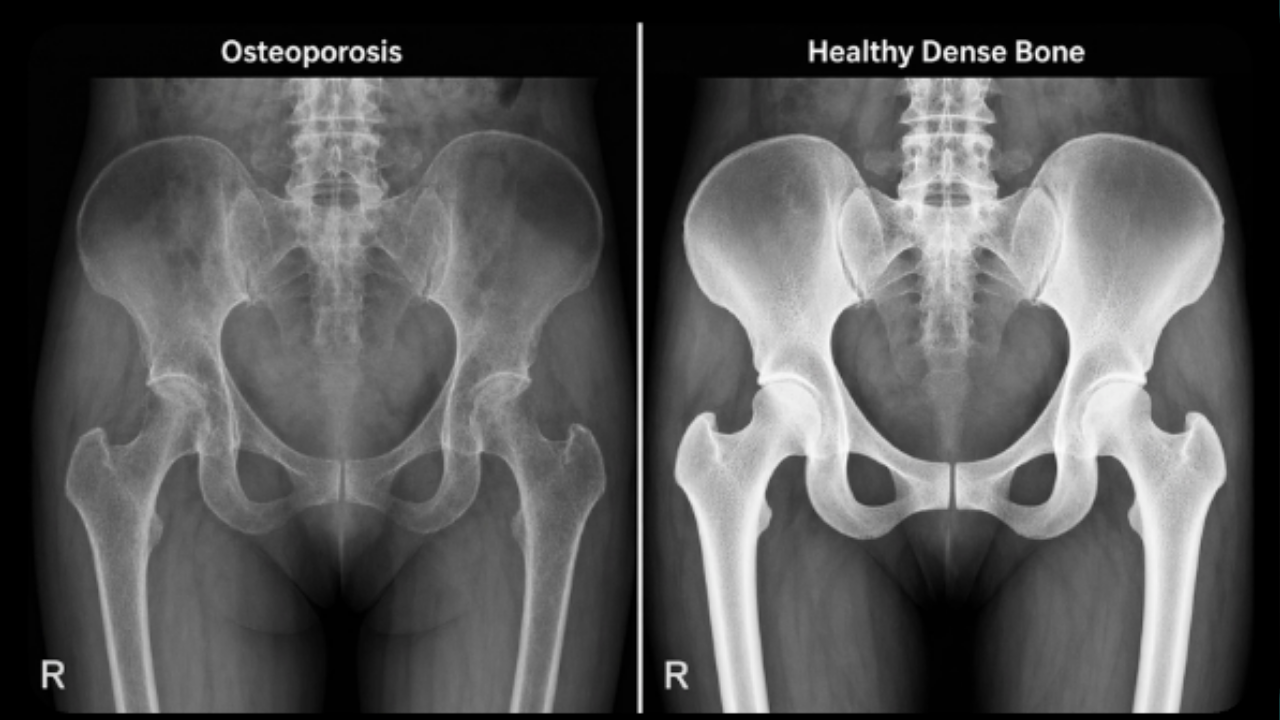
We talk a lot here about how strength training changes the way you look and how your metabolism functions. Today, I want to talk about another reason that this stuff matters as much as it does: your bones.
Most women think of bone as something fixed, like a frame you’re born with that slowly wears down. The truth is actually much more interesting! Bone is living tissue. Your body breaks down and rebuilds your skeleton all the time, and it decides how much to rebuild based on what you ask of it.
Just like muscle, bone responds to load. When a muscle pulls hard on a bone, or your body absorbs force through it (like when you jump), the bone takes that as a signal to lay down more mineral and get stronger. When the demand isn’t there, your body stops spending resources on it.
We reach peak bone mass around age 30, and it slowly declines after that. It drops faster in the years around menopause, when estrogen falls. Whether you’re in that window right now or you’re many years past it, now is the best time to start lifting. Your bones are still responding to what you do today, at 60, 70, and beyond.
Why this matters so much
A hip fracture after 65 isn’t just an inconvenience. It’s one of the most serious events in an older woman’s life, with real consequences for independence and even survival. About 20% of postmenopausal women who break a hip die within a year. You can imagine how that piece of information made me feel every single time I encountered a hip fracture in the ER.
Strong bones are the difference between falling and getting back up, and falling and never being the same again. And unlike a lot of things that come with aging, you actually have a lot of say in how this goes.
What actually builds bone
The stimulus your skeleton needs isn’t gentle movement. It’s meaningful load. In practice:
- Lift heavy enough to matter. Light weights for lots of reps seems like work, but it’s a weak signal to your bone. The studies showing real improvements in bone density in postmenopausal women used heavy, progressive resistance training, and it was safer than most people assume. Your last few reps should feel hard.
- Load the right movements. Squats, hip hinges like deadlifts, lunges and step-ups, presses, rows, and carries. These load your hips and spine, which are exactly the sites that matter for fracture risk. Dumbbells and your own bodyweight are enough to start.
- Progress over time. Bone adapts to what it’s exposed to. The weight that challenged you three months ago isn’t a strong signal anymore, so you need to keep asking for a little more.
- Add a little impact if your joints allow. Hops, skips, step-downs, even brisk stair climbing. Keep it short, frequent, and low-volume.
- Give it the raw materials. Get enough protein, calcium, and vitamin D. You can’t build a mineralized structure without the minerals, or without the protein matrix that holds them.
- Get the data. Ask your physician about a DEXA scan. Screening is standard at 65, and earlier if you have risk factors: a fracture as an adult, family history, early menopause, low body weight, or regular steroid use.
If you already have osteopenia or osteoporosis
This still applies to you, maybe more than anyone. Resistance training is one of the few things shown to improve or preserve bone density at any age. It also builds the strength and balance that keep you from falling in the first place.
Two things first. Clear strength training with your doctor before you start, including how much impact is right for you. And proper form matters even more for you. If it’s available to you, consider working with a trainer in person until you feel confident and comfortable with the main movements: squat, hip hinge, press, and row. Once those feel solid, you can build from there with confidence.
If you want to learn how to create your own strength program based on your own body, goals, history, injuries, equipment, and schedule, check out my book Your First Strength Program. It’s me teaching you how to fish, not just giving you fish. If you want to start with just the fish, here’s my free 2-day home workout plan.
Free: The Strong for Life Protein Guide
A woman’s guide to using protein to lose fat, build strength, and stay powerful through menopause and beyond.