
I put out a video about knee pain last week, and a few hundred of you wrote to me in the comments. Two things kept coming up that I want to address.
A lot of you had already scaled way back or stopped entirely. One woman had been skipping lunges “to save my knees.” Another had been cutting back her walks because she was afraid of wear and tear.
And there were many women who assumed the video wasn’t meant for them because their situation was too advanced. Bone on bone. No cartilage left. Already approved for a replacement.
Here’s what I want to be super clear about, because it applies to all joint pain, not just knees.
Keep the movement pattern. Adjust the details.
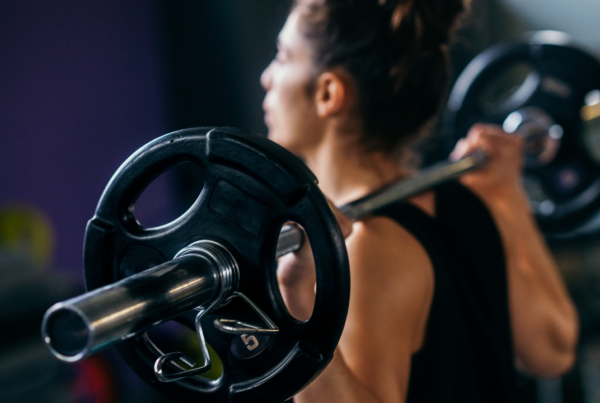
Your body really needs to be able to squat, hinge, push, pull, and carry. Those five patterns should be seen as non-negotiable — they’re what keep you capable and independent. But there is no exercise that you’re obligated to perform. If something hurts, don’t do it! Loading your muscles is the goal, and there are countless ways to do that.
Three things to try:
- Change the range. Squatting to a box at a depth that’s comfortable totally counts. Lunging halfway totally counts. Most joint pain happens toward the end of a range — so do the movement using the range you’re comfortable with, and you can usually increase that range over time.
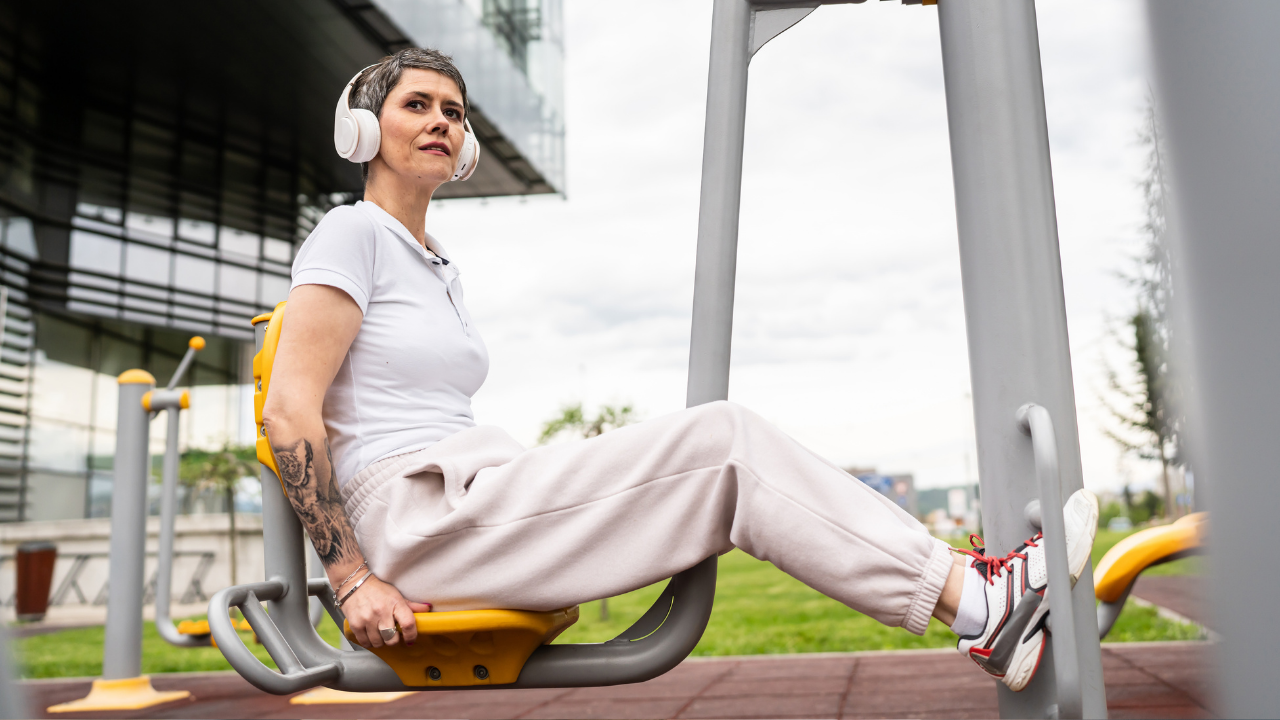
- Change the method. With shoulder pain, it often helps to hold the dumbbells facing each other instead of facing forward, or to press on an incline instead of straight overhead. If a regular dumbbell squat bothers your knees, try a goblet squat holding a dumbbell at your chest, or a leg press, where the machine supports your back and you control exactly how much your knees bend.
- Change the rep range. Use lighter weights and aim for a higher rep range (like 10-12 or 12-15). As long as you’re pushing yourself and those last few reps are really hard for you, you’re giving your muscles a strong stimulus to grow with less load on the joint.
And if you’re doing all 3 and you still have pain, try not moving the joint at all. A wall sit. Sitting in a chair and contracting your thigh muscles for 3 seconds x 10 reps. Glute squeezes. Your muscle is under real tension and your knees never change position. One woman wrote that glute squeezes took her from “all but crippled” to “I can almost run up the hill now.”
Now — let’s talk for a quick sec about cardio, and this applies to those of you with “bone-on-bone” just as much as anyone else!
If you have moderate to advanced osteoarthritis, or knee pain from other issues, barring any direct orders otherwise from your doctor, you can still do HIIT — high-intensity interval training. What you can’t do is high impact. Those are two different things.
“High intensity” describes what your cardiovascular system experiences. “High impact” describes what your knees experience.
You can take your heart and lungs exactly where HIIT needs them to be without your joints getting pounded.
How? Swimming, the elliptical (if your knees can handle it), a rowing machine (some of you will be fine on one, some won’t), and the arm bike that most women walk right past — who says biking has to be done with legs? This is a totally legit cardio machine that you can use for your HIITs.
What’s off the table is running, sprinting, and jumping — because those are high impact.
The structure is the same no matter what cardio you use for your HIITs: about 30-45s of high intensity (very hard work) followed by a longer low-intensity interval (often 2-3 min) — enough to bring your heart rate and breathing rate way down and allow you to feel “ready” to go hard again.
The strongest predictor of how a joint feels over the long term is how much strong muscle surrounds it.
Avoiding moving the joint tends to make it worse, not better.
If you’d like me to look at your history, your joint issues, your labs, body composition, experience, preferences, and goals, and put together a completely personalized health & strength plan for you — and then go through it all together with you on a 60-min video call — check out my Strategy Session.
Free: The Strong for Life Protein Guide
A woman’s guide to using protein to lose fat, build strength, and stay powerful through menopause.